
The home remodeling industry has cooled off after the lockdown-era boom of the early 2020s, but a rise in the average age of first-time homeowners could soon reignite it. According to a November 2025 study conducted by the National Association of Realtors, the median age of first-time homeowners has risen to 40. Rising interest rates and longstanding affordability concerns have long plagued the real estate sector, but changes in demographics and consumer behavior could lead to big gains in ancillary industries like remodeling.
A shift in who's buying homes
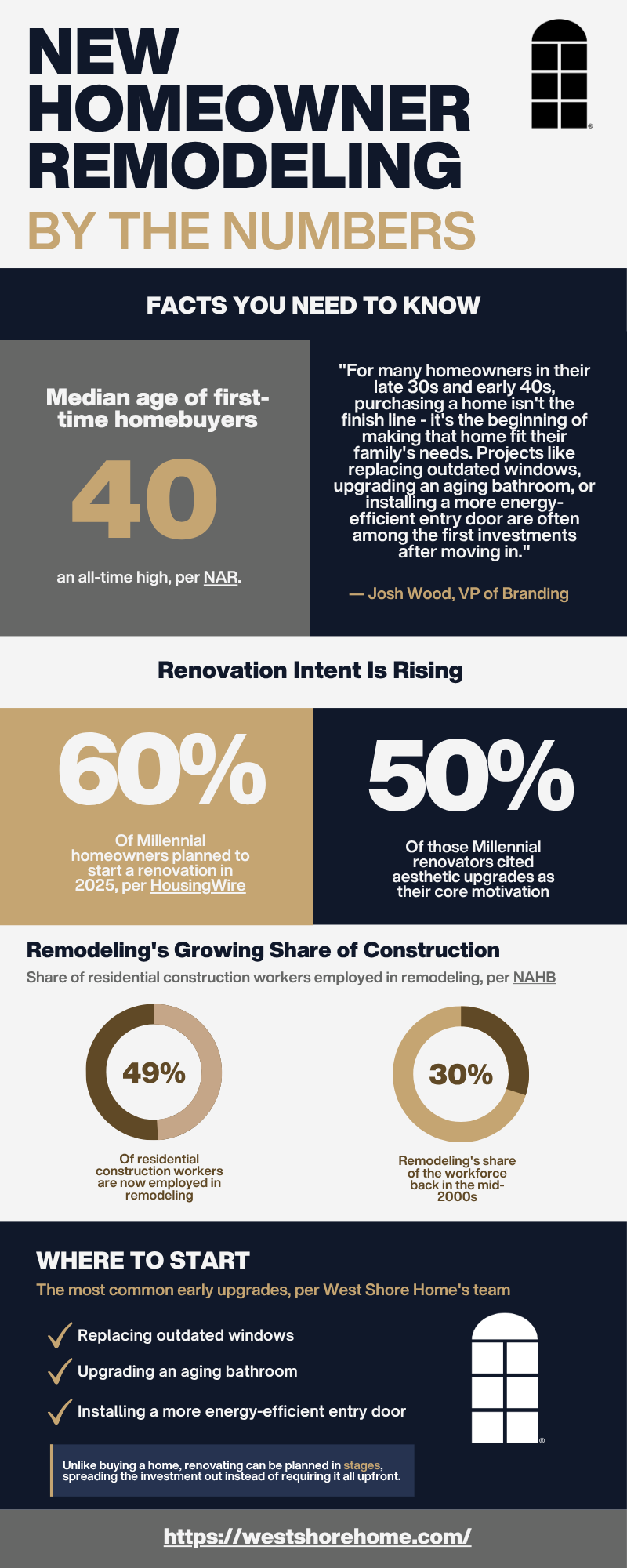
For decades, the first-time homebuyer was assumed to be someone in their late 20s or early 30s. That assumption no longer holds. Rising interest rates and affordability constraints have pushed the timeline back for many would-be owners, and the data shows it: the median first-time buyer is now 40 years old, according to the National Association of Realtors.
For many homeowners in their late 30s and early 40s, purchasing a home isn't the finish line — it's the beginning of making that home fit their family's needs. Projects like replacing outdated windows, upgrading an aging bathroom, or installing a more energy-efficient entry door are often among the first investments after moving in.
— Josh Wood, Vice President of Branding and Creative Services, West Shore Home
Renovate now, move later
According to HousingWire, 60% of Millennial homeowners intended to begin a home renovation project in 2025, and half claimed that aesthetic upgrades were the core impetus for doing so. These numbers point to a clear pattern: thirty-to-forty-year-old first-time homebuyers are closing on older homes and remodeling them rather than building or buying newer ones. This is likely an adaptation to a difficult housing market, and if the trend continues, the remodeling industry could see a substantial boost.
Remodeling jobs are growing with demand
This shift correlates with a surge in employment in the remodeling sector in recent years. That's up drastically from the mid-2000s, a period during which only about 30% of residential construction workers were employed by remodelers. This sentiment is further corroborated by a Harvard study, which documented a steady increase in both average homeowner remodeling spend and total market size.
Why renovate instead of buy new
These metrics can likely be explained by the reduced cost of remodeling compared to buying new. Remodeling can also be planned in advance and completed in stages, unlike home buying, which is often opportunistic and demands a much larger up-front cost. For many first-time buyers entering the market later in life, renovating an existing home offers a practical way to create a space that better fits their lifestyle without taking on the cost of a newer property.
What this means for the remodeling industry
As these homeowners continue to prioritize upgrades that improve comfort, efficiency, and long-term value, the remodeling industry appears well positioned for sustained growth. While no single trend can predict the future of the housing market, the convergence of older first-time homebuyers, aging housing stock, and rising renovation spending suggests that remodeling will remain an important part of the homeownership journey for years to come.
Frequently asked questions
Why is the median age of first-time homebuyers rising?
Rising interest rates and long-standing affordability concerns have pushed the timeline for many buyers. According to a November 2025 National Association of Realtors study, the median age of first-time homeowners has climbed to 40, up from previous generations who typically bought much earlier.
Why are older first-time buyers renovating instead of buying new construction?
Remodeling an existing home is typically far less expensive than buying new construction, and it can be planned and staged over time rather than requiring a large lump-sum cost. For buyers entering the market later in life, this makes renovation a practical way to get a home that fits their needs without taking on new-construction pricing.
What kinds of renovations are these homeowners prioritizing?
According to HousingWire, about 60% of Millennial homeowners planned to start a renovation in 2025, and half cited aesthetic upgrades as the main driver. Common early projects include replacing outdated windows, upgrading an aging bathroom, and installing a more energy-efficient entry door.
Is the remodeling industry actually growing?
Yes. The National Association of Home Builders reports that remodeling now accounts for just under half of all residential construction workers, up from about 30% in the mid-2000s. A Harvard study has also documented steady increases in both average homeowner remodeling spend and total market size.
— Ready When You Are
Making your home fit your life starts with one free conversation.
Whether you're planning your first project after closing on a home or your fifth, a West Shore Home designer will visit your home, listen to what you want, and build a plan around your space and budget. No pressure, no obligation, ever.